Should y shouldn't son verbos modales en inglés que utilizamos para dar consejos, hacer recomendaciones, y expresar lo que creemos que es correcto o incorrecto.
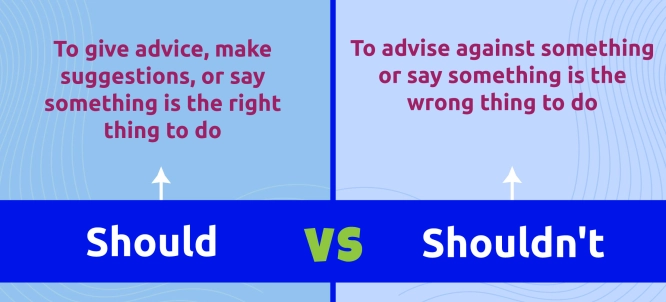
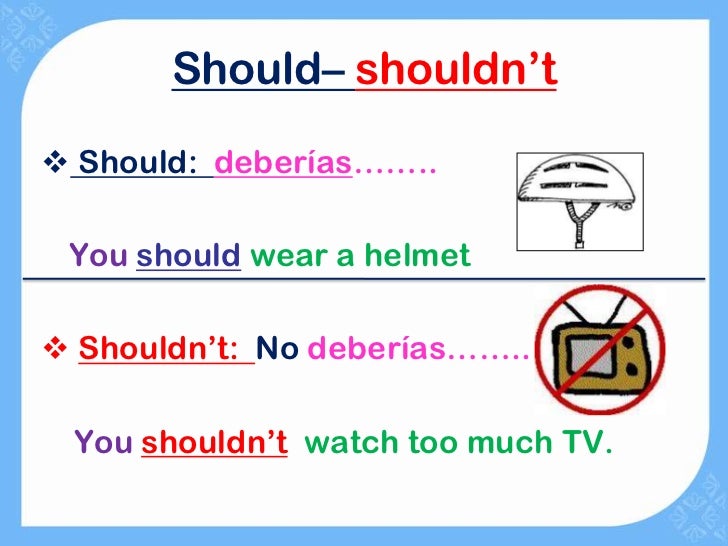
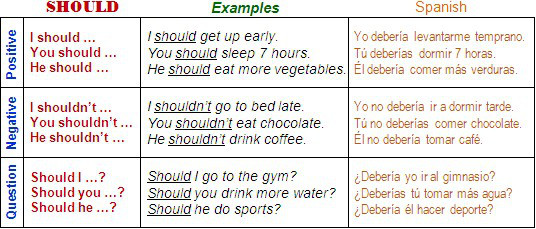
Should significa "debería" y expresa una obligación suave o una sugerencia. Shouldn't es la forma abreviada de "should not" y significa "no debería," indicando algo que no es recomendable hacer.
La estructura básica es sencilla: Sujeto + should/shouldn't + verbo en forma base (infinitivo sin "to").
Ejemplo:
Should and shouldn't
You should eat more vegetables. (Deberías comer más vegetales.)
He shouldn't stay up so late. (Él no debería quedarse despierto hasta tan tarde.)
Observa que el verbo después de should o shouldn't no cambia, sin importar el sujeto.
Usos comunes:
We are the Sixth Graders of CEIP Asturias!: English Language
Dar consejos: "You should see a doctor." (Deberías ver a un doctor.)
Hacer recomendaciones: "We should try that new restaurant." (Deberíamos probar ese nuevo restaurante.)
Expresar expectativa: "The bus should be here soon." (El autobús debería estar aquí pronto.)
Indicar desaprobación o algo incorrecto: "They shouldn't treat people like that." (Ellos no deberían tratar a la gente así.)
Ejercicios:
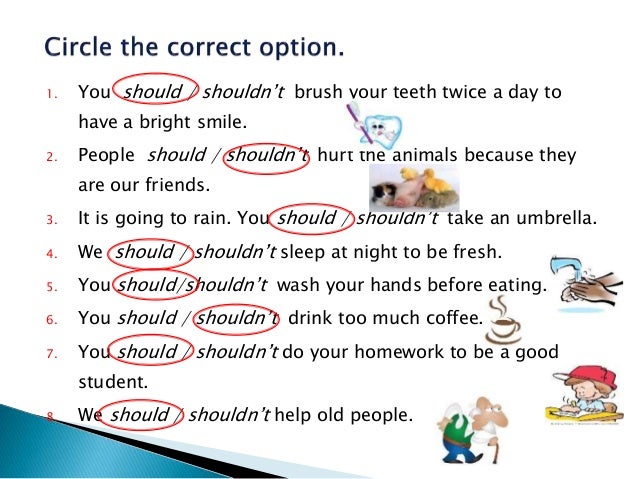
Completa las siguientes oraciones con should o shouldn't:
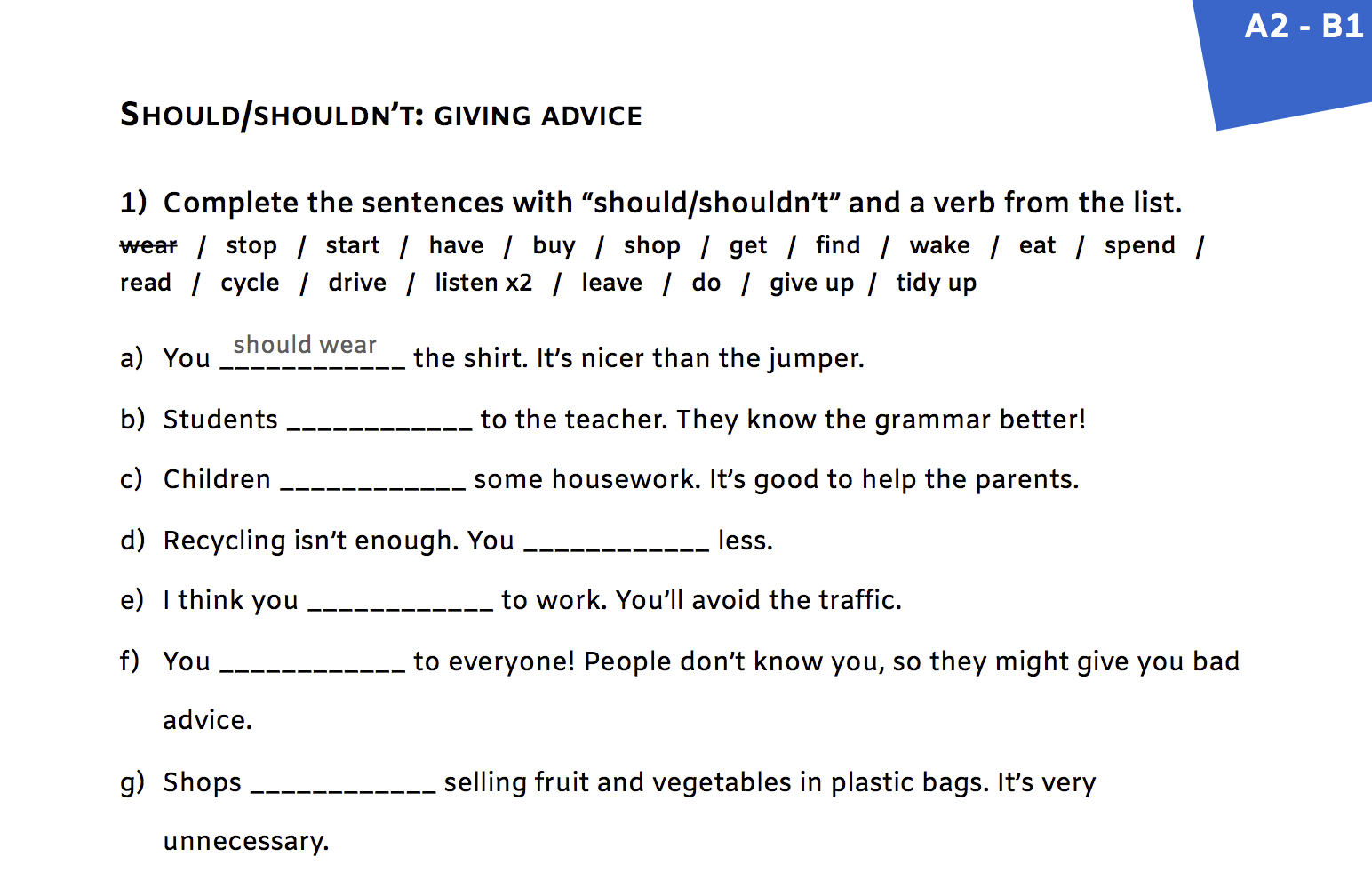
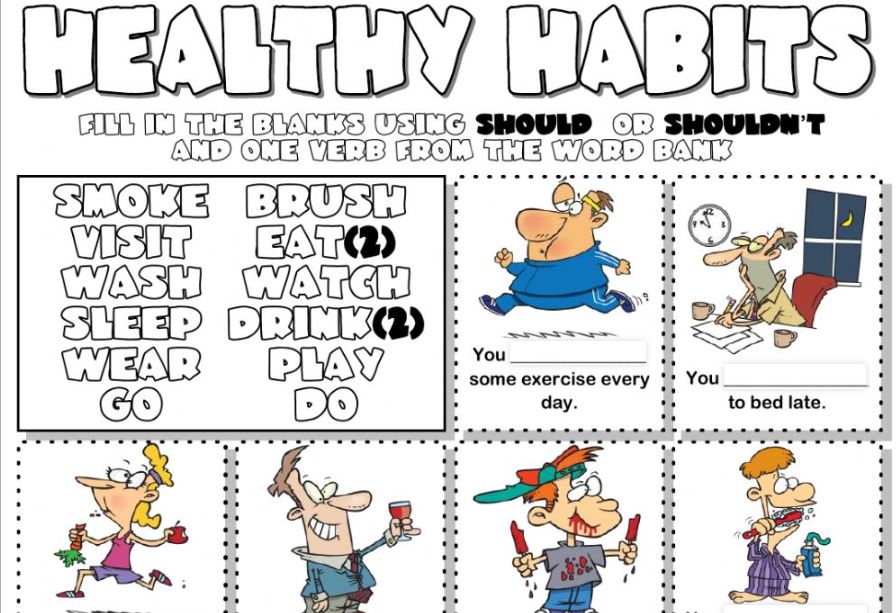
Should Shouldn't Exercises Elementary Giving Advice
You ______ study harder if you want to pass the exam.
He ______ drive so fast; it's dangerous.
We ______ be late for the meeting.
She ______ worry so much; everything will be okay.
They ______ help their parents more often.
Respuestas:
should
shouldn't
shouldn't
shouldn't
should
Recuerda que should y shouldn't son herramientas útiles para expresar opiniones y ofrecer guía. Practica usándolos en tus conversaciones para mejorar tu inglés.