El Perro De Mi Amigo Luciano Es Muy Amigable

"El perro de mi amigo Luciano es muy amigable". This Spanish sentence translates to "My friend Luciano's dog is very friendly." Let's break it down piece by piece!
Understanding the Parts
The sentence is composed of several key parts, each playing a crucial role in conveying the meaning. We'll explore them in order:
- "El perro": This means "the dog." "El" is the masculine definite article (like "the" in English) and "perro" is the Spanish word for "dog."
- "de mi amigo Luciano": This part describes whose dog we're talking about. It translates to "of my friend Luciano." Let's look at it further:
- "de": This is the preposition "of" or "belonging to."
- "mi": This is the possessive adjective "my."
- "amigo": This means "friend" (masculine). If Luciano's friend were a woman, it would be "amiga."
- "Luciano": This is a proper noun, a name: Luciano.
- "es": This is the third-person singular form of the verb "ser" (to be). It means "is."
- "muy amigable": This means "very friendly."
- "muy": This is an adverb meaning "very."
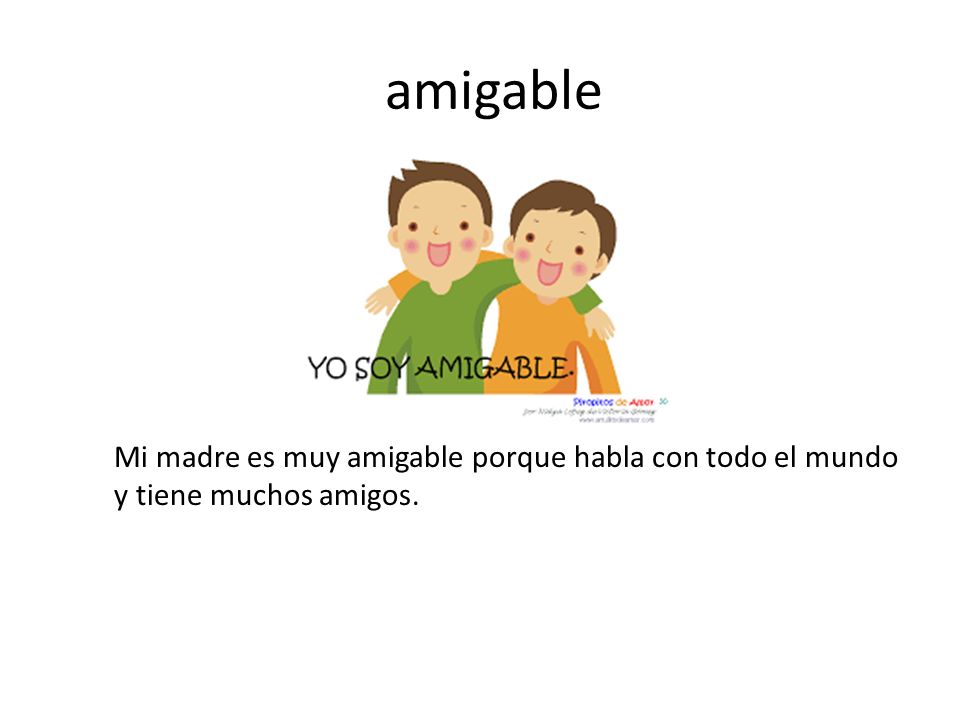
- "amigable": This is an adjective meaning "friendly." It's a cognate, which means it looks and sounds similar to its English counterpart.
Putting It All Together
Now, let's combine all the pieces. "El perro de mi amigo Luciano" tells us whose dog we are discussing. "Es muy amigable" describes the dog's personality. The sentence as a whole, "El perro de mi amigo Luciano es muy amigable," tells us a simple fact: that my friend Luciano's dog has a friendly disposition.
Must Read
Think of other examples. Instead of "amigable," we could say "El perro de mi amigo Luciano es muy grande" (My friend Luciano's dog is very big) or "El perro de mi amigo Luciano es muy pequeño" (My friend Luciano's dog is very small). You can substitute different adjectives to describe the dog.

Why This Matters
Understanding simple sentences like this is a crucial step in learning Spanish. It teaches you about articles (el), prepositions (de), possessive adjectives (mi), verbs (es), and adjectives (amigable). By breaking down the sentence into its components, you can build a strong foundation for more complex sentence structures.
So next time you see someone say, "El perro de mi amigo Luciano es muy amigable," you'll know exactly what they mean! Keep practicing and you'll be fluent in no time!