Francisco Pizarro Map Of Exploration
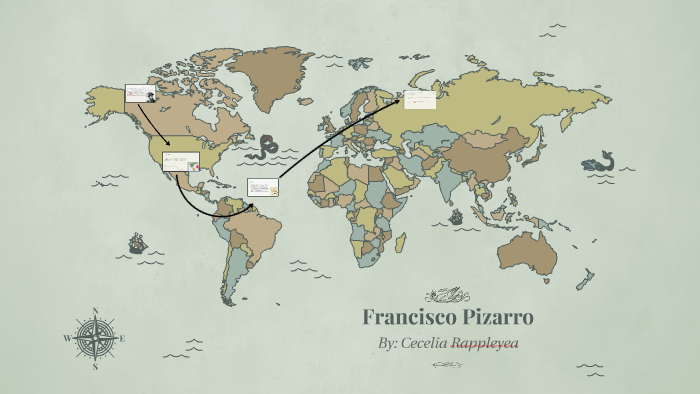
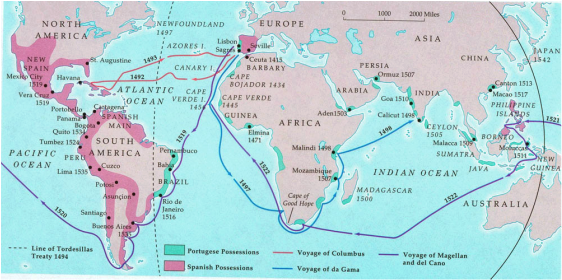
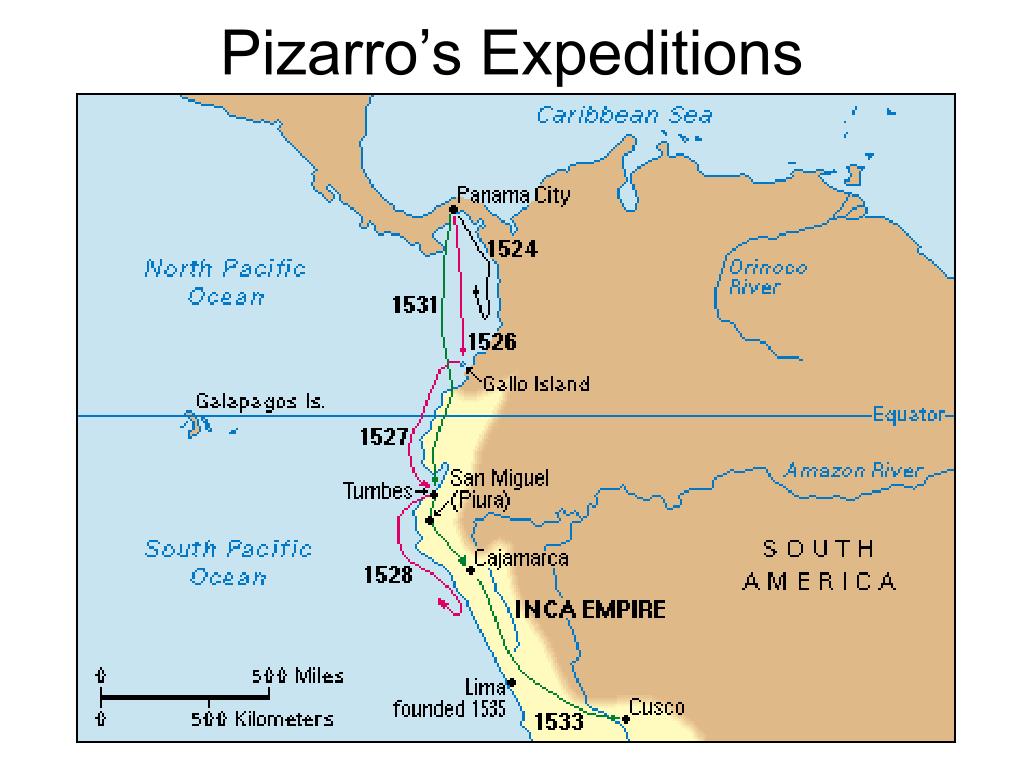
Francisco Pizarro's map of exploration refers to the routes and records of his voyages to South America, leading to the conquest of the Inca Empire. These weren't literal drawn maps in the way we might think of them today, but rather a growing body of knowledge about the coastline, the people, and the resources of the region.
Understanding the "Map"
Think of Pizarro's "map" less as a picture and more as a collection of information. It included:
- Coastal navigation: Knowing where the land was, how to navigate safely, and where to find good harbors.
- Indigenous populations: Information about the Inca people, their settlements, their power structures, and their weaknesses.
- Resources: Knowledge of gold, silver, and other valuables that could be extracted.
This "map" was built over several voyages. It wasn't something Pizarro had from the beginning. Each trip added to his understanding of the region.
Must Read
Building the Knowledge: Pizarro's Voyages
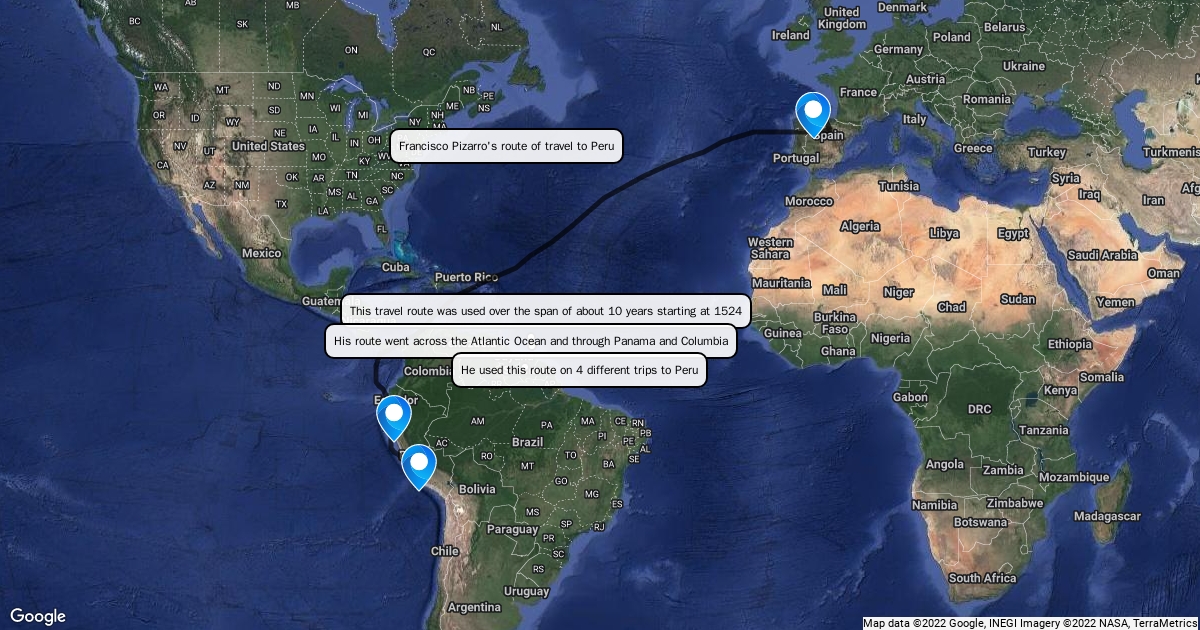
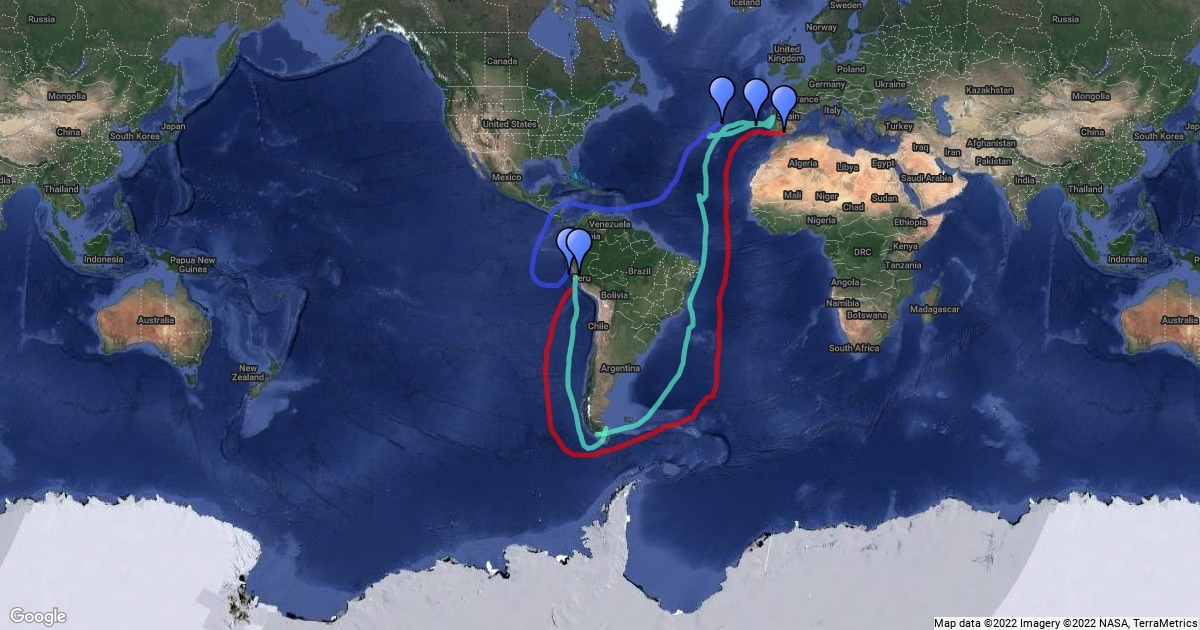
Pizarro made several voyages south from Panama in the 1520s. Let’s break down how he added to his "map" during these journeys:
First voyage (1524-1525): This was a reconnaissance mission. He sailed down the coast, gathering basic information about the land and the people. It was difficult and yielded little immediate reward, but it was the beginning of his "map."
.jpg)
Second voyage (1526-1528): This voyage was more successful. Pizarro's crew landed in what is now Ecuador and Peru. They encountered indigenous people and saw evidence of a rich and powerful civilization. This was a crucial moment. Pizarro realized the potential for wealth and conquest.
Information Gathering: Pizarro also kidnapped some indigenous people and took them back to Spain. He taught them Spanish and used them as interpreters and informants on subsequent voyages. They were key to understanding the Inca culture and weaknesses.
The "Map" and the Conquest
The information Pizarro gathered on his voyages formed the basis for his invasion. He knew:
- The size of the Inca Empire.
- The location of key cities like Cajamarca and Cusco.
- The internal conflicts within the Inca Empire (a civil war weakened the Inca, making them vulnerable).
With this "map" of knowledge, Pizarro was able to strategically plan his conquest. He targeted the Inca leadership, exploited internal divisions, and used his superior weaponry to defeat a much larger army.
Legacy of Pizarro's "Map"
While not a traditional map, Pizarro's growing knowledge of the region enabled the Spanish conquest. This "map" led to the destruction of the Inca Empire, the exploitation of its resources, and a lasting impact on South America. It represents a dark chapter in history, showing how knowledge, even gained through unethical means, can be used to achieve power and wealth.