Practice Exercise Will Or Will Not
En español, uno de los auxiliares modales más comunes para hablar sobre el futuro es will. También, will not (o su contracción won't) se usa para expresar negación en el futuro. Dominar el uso de will y will not es crucial para la comunicación efectiva en inglés.
Will para el Futuro Simple
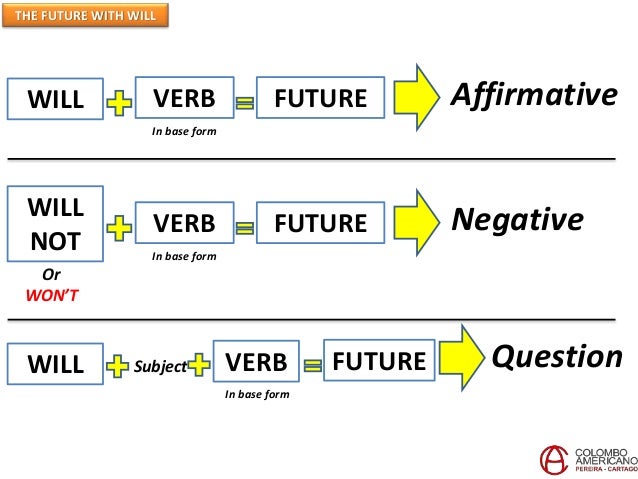
El auxiliar will se usa para construir el tiempo futuro simple. Este tiempo verbal se refiere a acciones o eventos que ocurrirán en el futuro. La estructura básica para una oración afirmativa es: Sujeto + will + verbo en forma base.
Por ejemplo, "I will travel to Spain next year." Esto significa que la persona planea viajar a España en el futuro. Otro ejemplo: "She will study harder for the exam."
Must Read
Usamos will para predicciones. Por ejemplo, "It will rain tomorrow." También lo usamos para promesas: "I will always love you." Y para decisiones espontáneas: "I will help you with that bag."
Will Not (Won't) para Negar el Futuro
Will not, o su forma contraída won't, se usa para expresar que algo no sucederá en el futuro. Es la forma negativa del futuro simple. La estructura básica es: Sujeto + will not/won't + verbo en forma base.

Por ejemplo: "I will not go to the party." o "I won't go to the party". Ambas oraciones significan lo mismo: la persona no irá a la fiesta. Otro ejemplo: "He will not eat the vegetables."
Utilizamos won't para negar predicciones: "It won't snow tomorrow." También para expresar rechazo: "I won't do that." Y para indicar falta de voluntad: "He won't listen to me."

Ejemplos Prácticos con Will y Will Not
Consideremos ejemplos cotidianos. "The bus will arrive in five minutes." (El bus llegará en cinco minutos). "The bus won't arrive on time because of the traffic." (El bus no llegará a tiempo por el tráfico).
En el contexto laboral: "We will finish the project by Friday." (Terminaremos el proyecto para el viernes). "We won't meet the deadline if we don't work harder." (No cumpliremos con la fecha límite si no trabajamos más duro).

En situaciones personales: "I will call you later." (Te llamaré más tarde). "I won't forget your birthday." (No olvidaré tu cumpleaños).
Ejercicios de Práctica
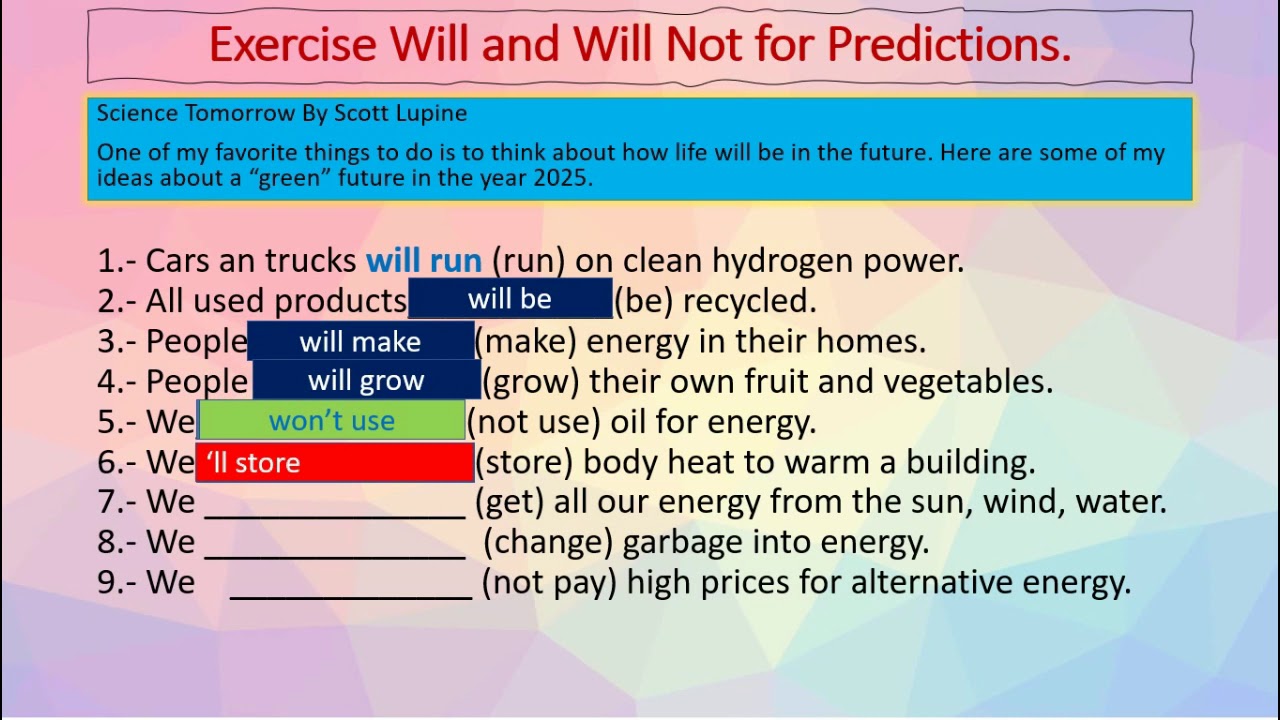
Para practicar, transforma las siguientes oraciones al futuro usando will o will not. Presta atención al contexto.

- She (study) medicine.
- They (go) to the beach tomorrow.
- I (lend) you my car.
- He (arrive) late.
- We (eat) meat tonight. (Make this one negative)
Respuestas Sugeridas
- She will study medicine.
- They will go to the beach tomorrow.
- I will lend you my car.
- He will arrive late.
- We won't eat meat tonight.
Consejos Adicionales
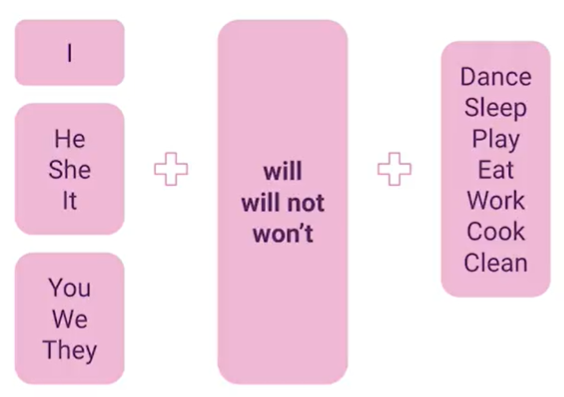
Recuerda que will se usa con todos los sujetos (I, you, he, she, it, we, they). No cambia de forma. La contracción won't es común en el habla informal. Presta atención al contexto para determinar si debes usar will o will not.
Practica la pronunciación de will y won't. Asegúrate de que la entonación transmita la intención correcta. Un ligero cambio en la entonación puede cambiar el significado de la oración.
Observa cómo los hablantes nativos usan will y won't en conversaciones y medios de comunicación. Esto te ayudará a internalizar el uso correcto y natural de estos auxiliares modales.
.jpg)