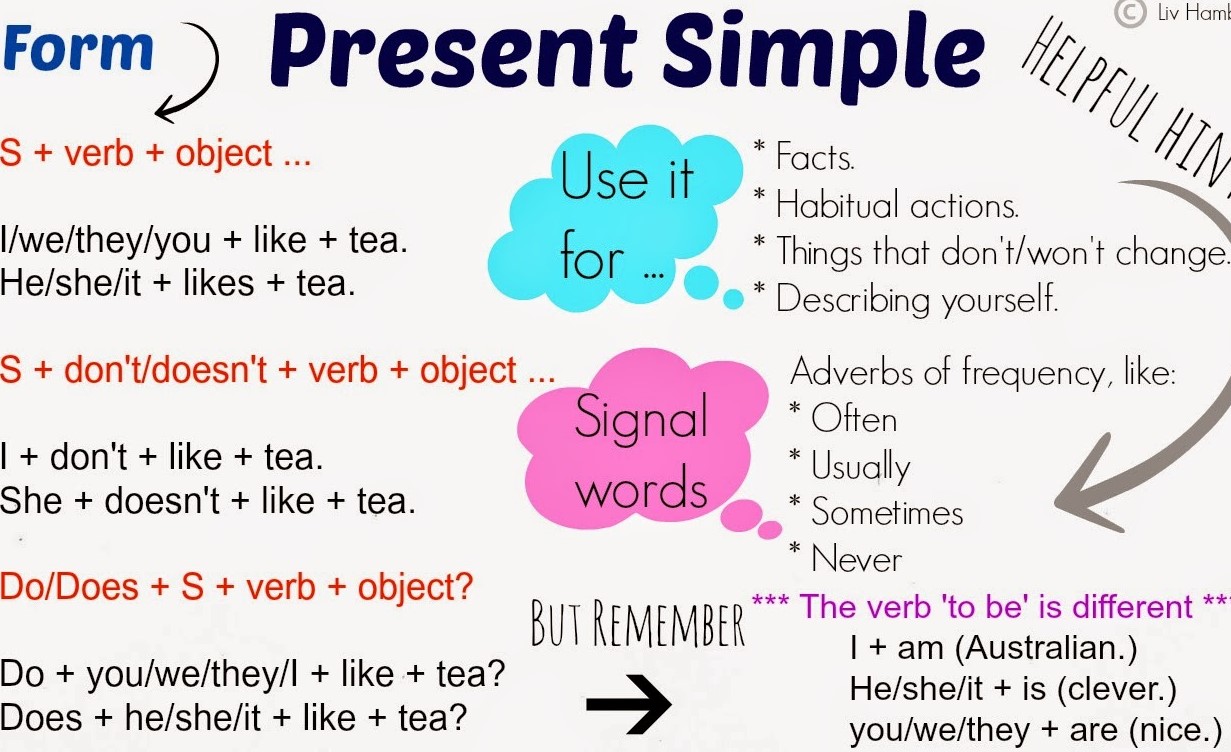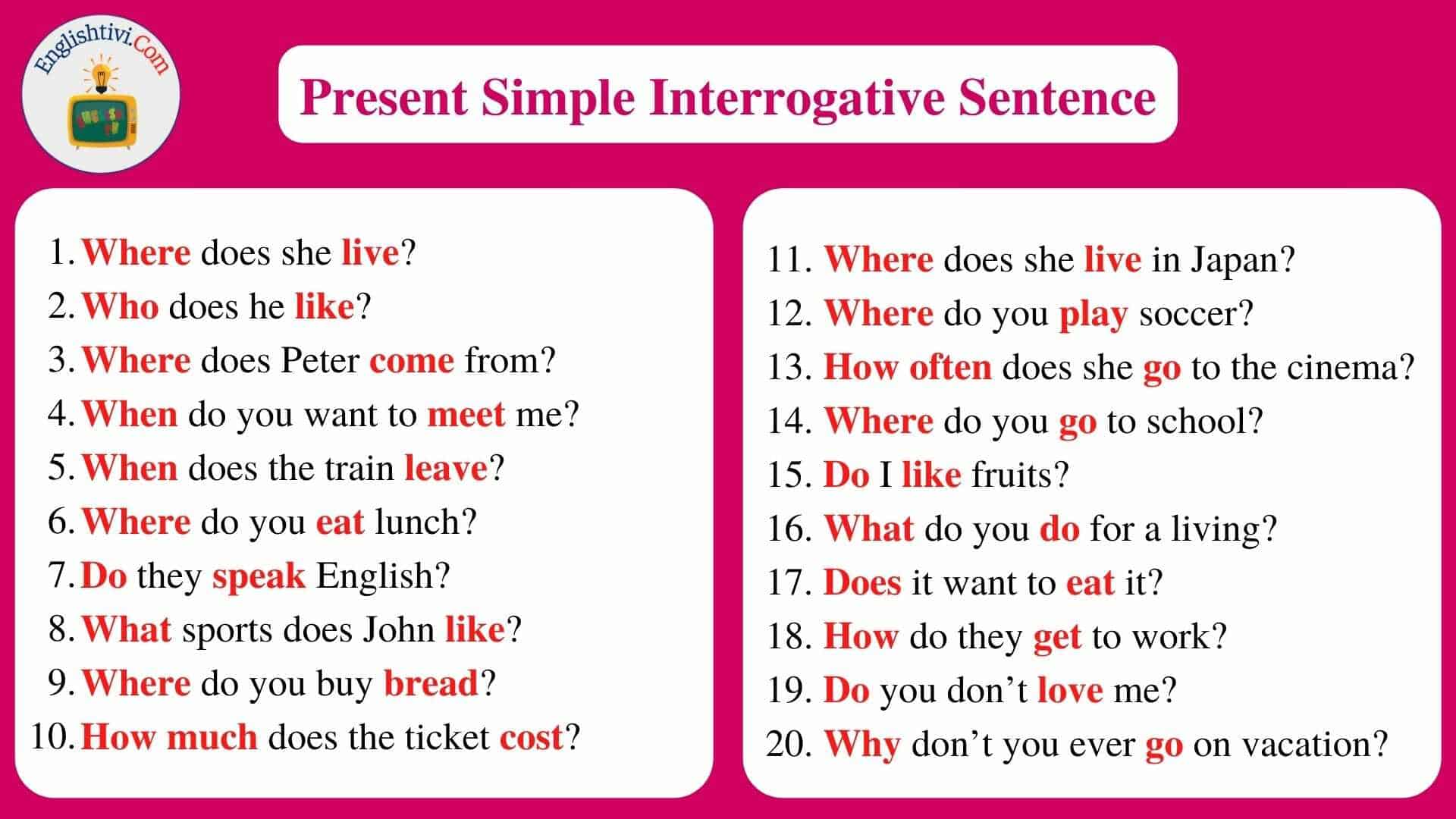
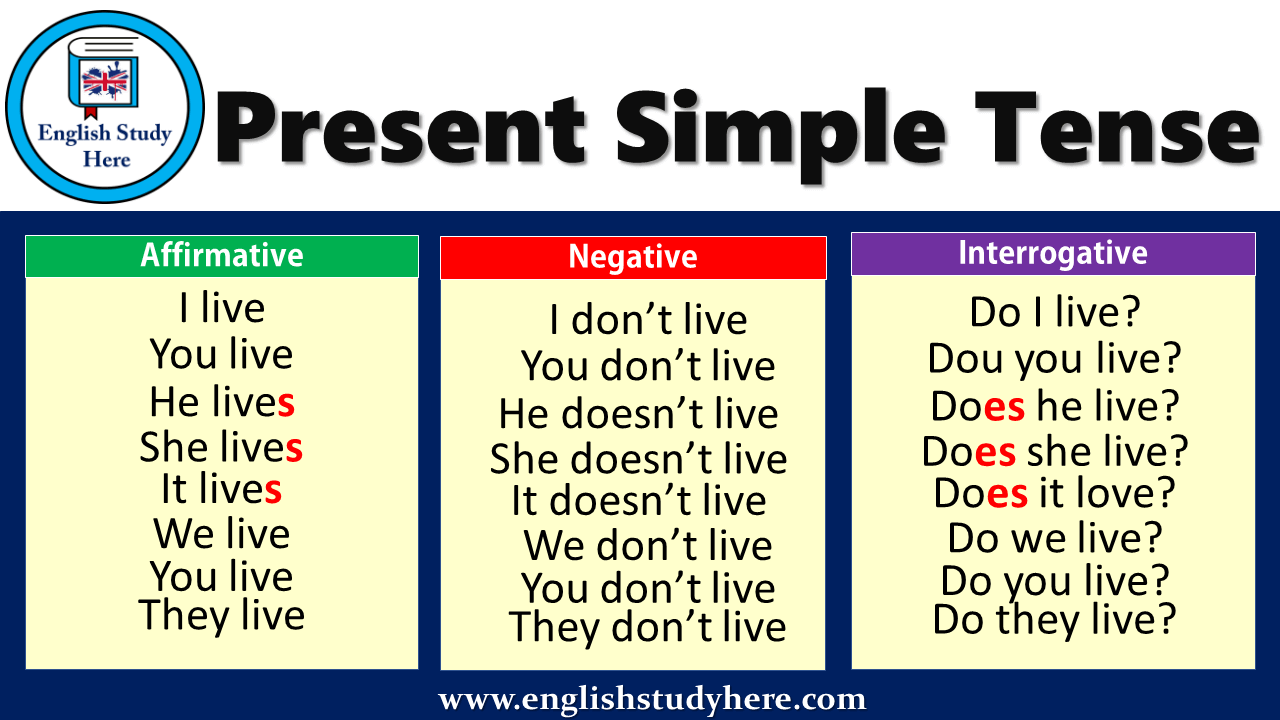
Simple Present Affirmative Negative Interrogative
El presente simple es un tiempo verbal que describe hábitos, hechos generales, acciones repetidas o situaciones inmutables, emociones y deseos. Lo usamos para hablar de cosas que ocurren regularmente o que son verdaderas en el presente. Aquí te explicamos cómo formar oraciones afirmativas, negativas e interrogativas de manera sencilla.
Afirmativo
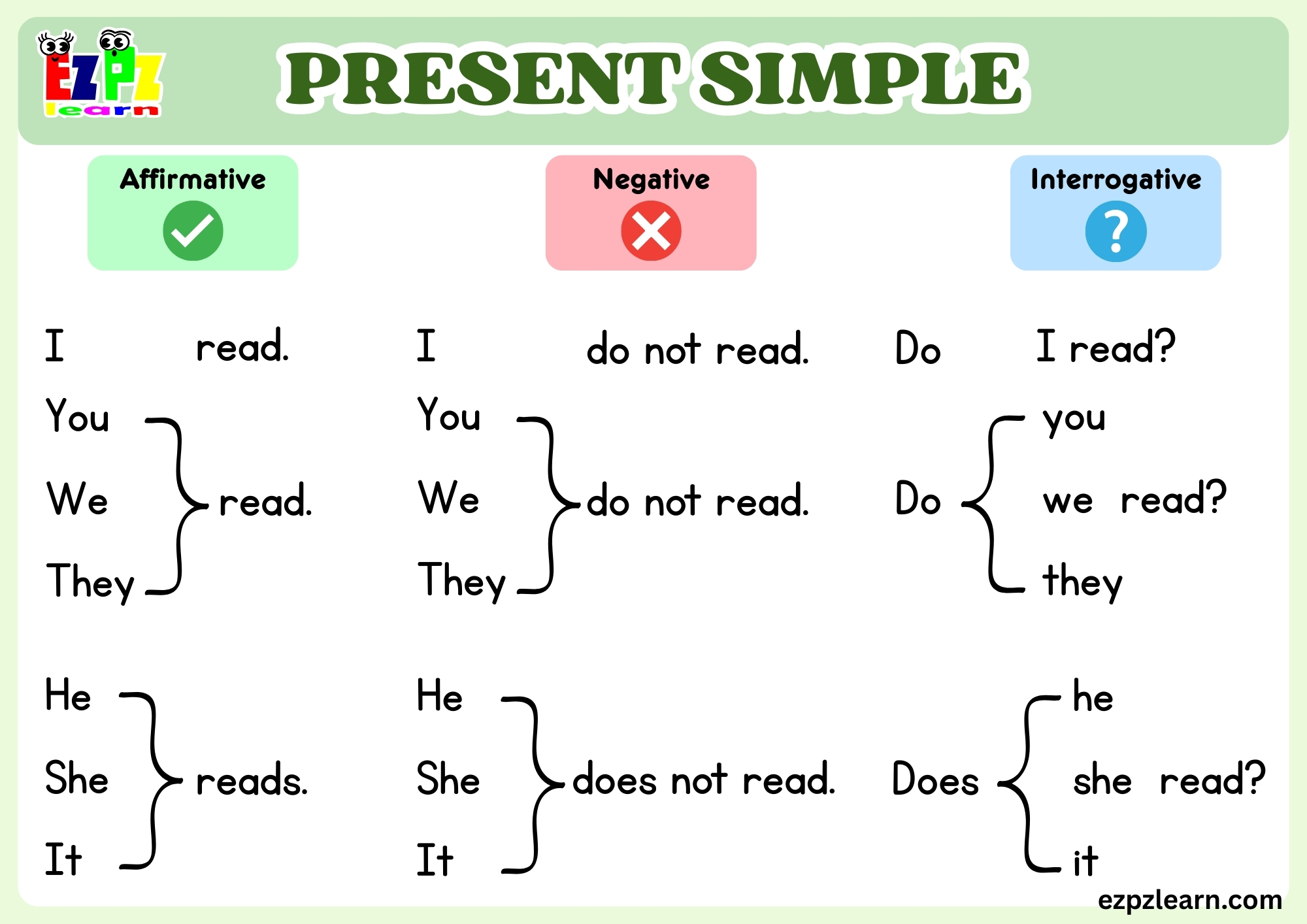
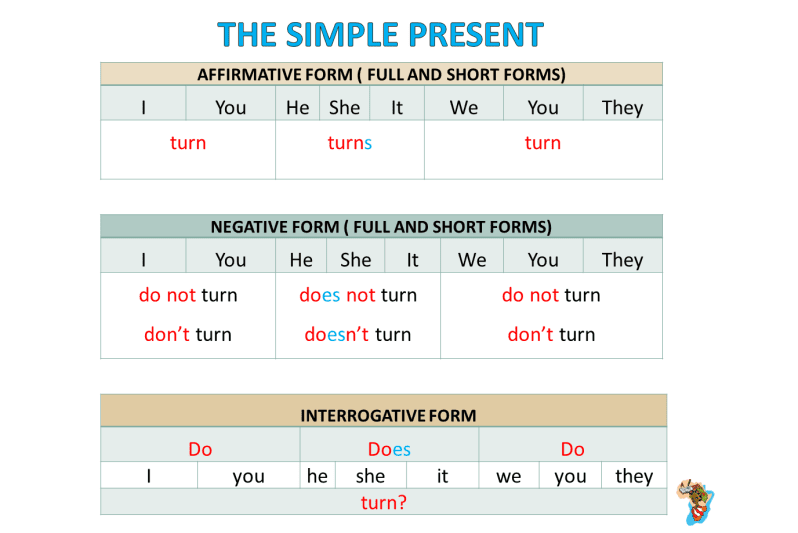
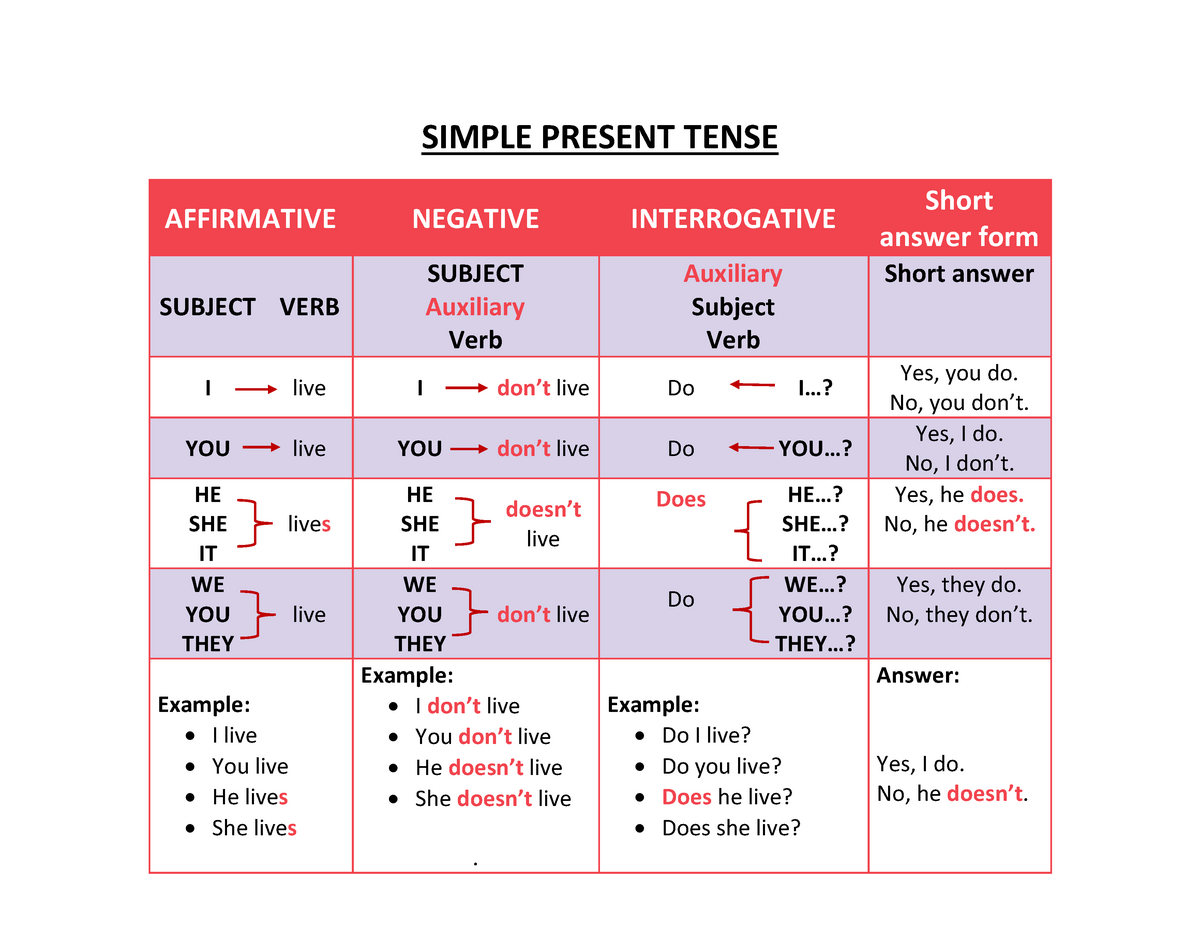
Para formar oraciones afirmativas, generalmente usamos el verbo en su forma base. ¡Pero ojo! Con la tercera persona del singular (he, she, it), añadimos una "-s" o "-es" al final del verbo.
- I play the guitar. (Yo toco la guitarra.)
- You eat pizza. (Tú comes pizza.)
- He plays football. (Él juega al fútbol.)
- She reads books. (Ella lee libros.)
- It rains a lot here. (Aquí llueve mucho.)
- We watch TV. (Nosotros vemos la tele.)
- They speak English. (Ellos hablan inglés.)
Negativo
Para formar oraciones negativas, usamos los auxiliares "do not" (don't) o "does not" (doesn't) antes del verbo en su forma base. "Does not" se usa solo con la tercera persona del singular (he, she, it).
Must Read
- I do not (don't) like coffee. (No me gusta el café.)
- You do not (don't) live here. (No vives aquí.)
- He does not (doesn't) work on Sundays. (Él no trabaja los domingos.)
- She does not (doesn't) sing very well. (Ella no canta muy bien.)
- It does not (doesn't) snow in summer. (No nieva en verano.)
- We do not (don't) understand the question. (No entendemos la pregunta.)
- They do not (don't) want to go. (Ellos no quieren ir.)
Interrogativo
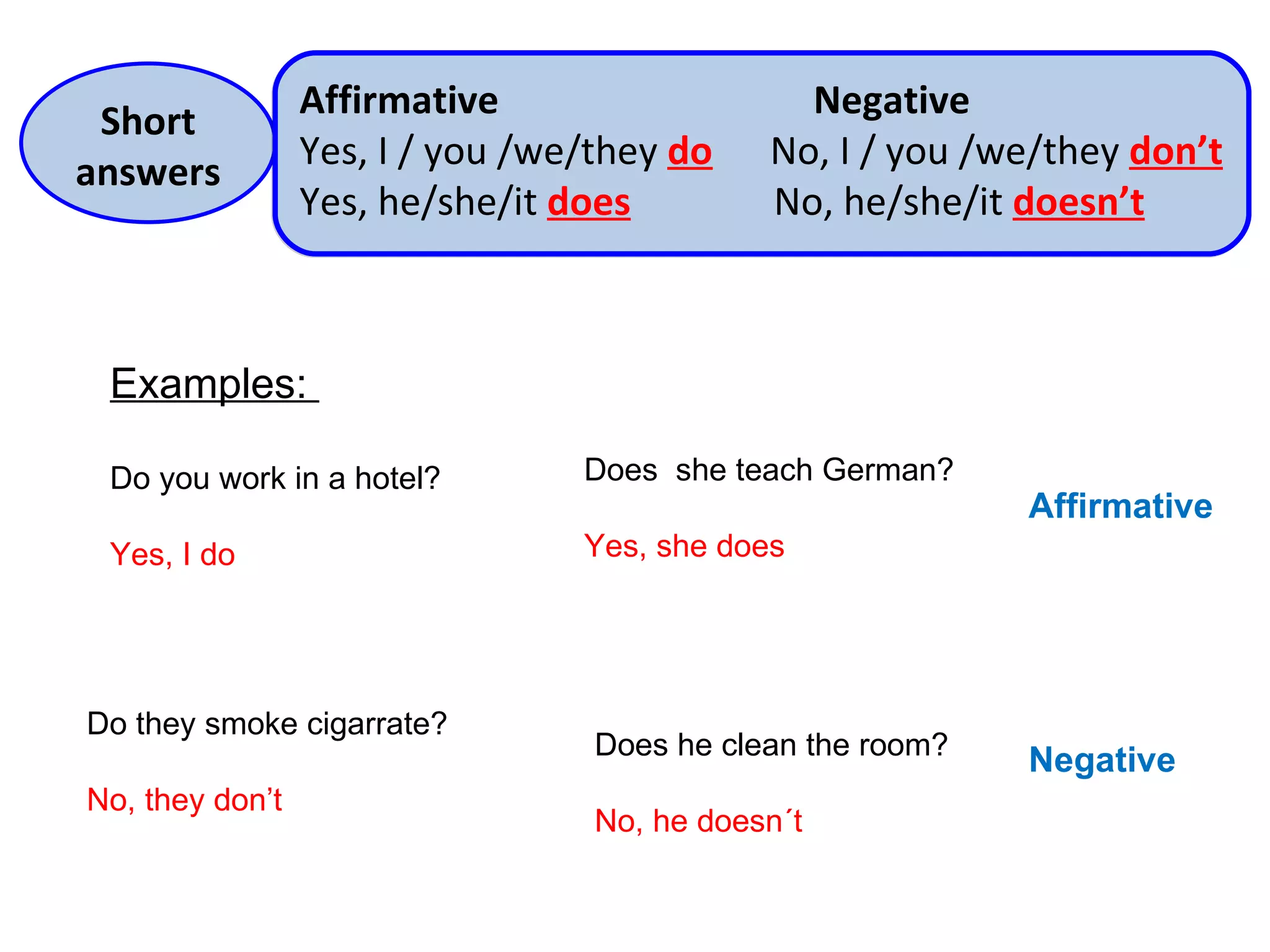
Para formar preguntas, usamos los auxiliares "do" o "does" al principio de la oración, seguidos del sujeto y el verbo en su forma base. "Does" se usa con la tercera persona del singular (he, she, it).
- Do I need a passport? (¿Necesito un pasaporte?)
- Do you speak French? (¿Hablas francés?)
- Does he like pizza? (¿Le gusta la pizza?)
- Does she play tennis? (¿Ella juega al tenis?)
- Does it work properly? (¿Funciona correctamente?)
- Do we have enough time? (¿Tenemos suficiente tiempo?)
- Do they live in Madrid? (¿Viven ellos en Madrid?)