
Used To Be Used To Get Used To Would Exercises
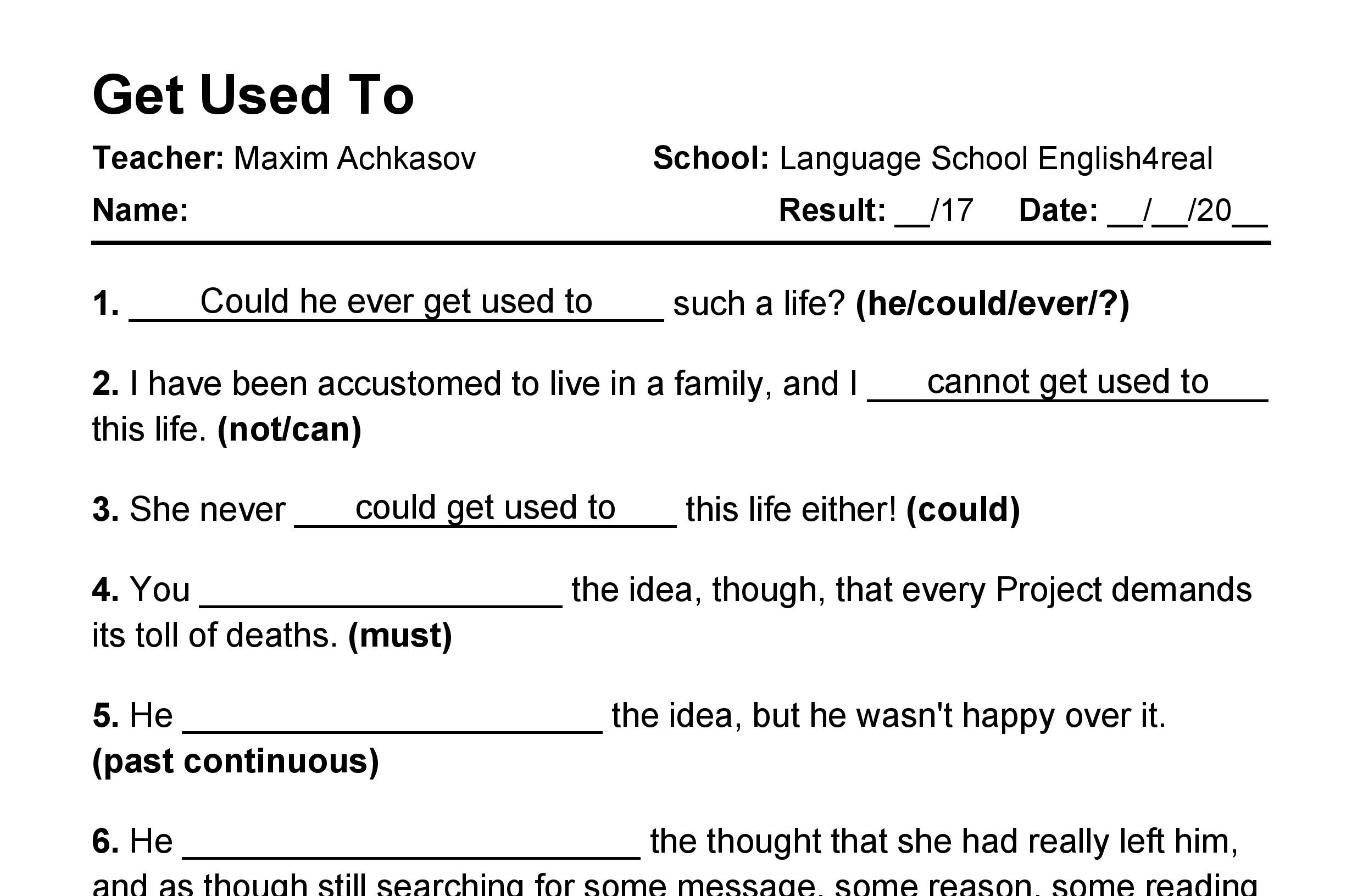
¿Confundido con 'Used To', 'Be Used To' y 'Get Used To'? No te preocupes, ¡a muchos estudiantes les pasa! Vamos a desglosarlos para que los comprendas fácilmente. ¿Qué es cada uno?
Used To: Se refiere a algo que solías hacer regularmente en el pasado pero que ya no haces. Es como decir "antes yo... pero ahora no".
Be Used To: Significa estar acostumbrado a algo, sentirse cómodo con ello. Es como decir "estoy habituado a..." o "no me sorprende...".
Must Read
Get Used To: Significa acostumbrarse a algo, adaptarse a una nueva situación. Es el proceso de pasar de no estar cómodo con algo a estarlo. Es como decir "me estoy acostumbrando a..." o "voy a tener que adaptarme a...".
¿Cómo funciona cada uno?

Used To se usa con la forma base del verbo. Por ejemplo: "I used to play football every day." (Antes jugaba al fútbol todos los días). La estructura es: Sujeto + used to + verbo en infinitivo sin 'to'.
Be Used To se usa con un sustantivo o con un verbo en gerundio (verbo terminado en -ing). Por ejemplo: "I am used to waking up early." (Estoy acostumbrado a despertarme temprano) o "I am used to the cold weather." (Estoy acostumbrado al clima frío). La estructura es: Sujeto + to be (am/is/are) + used to + sustantivo/verbo-ing.

Get Used To también se usa con un sustantivo o con un verbo en gerundio. Por ejemplo: "I am getting used to studying online." (Me estoy acostumbrando a estudiar en línea) o "I am getting used to the new schedule." (Me estoy acostumbrando al nuevo horario). La estructura es: Sujeto + to get (get/gets/got/getting) + used to + sustantivo/verbo-ing.
Would: Similar a 'used to' pero con una diferencia sutil. Se usa para hablar de acciones repetidas en el pasado, pero generalmente se limita a narraciones y situaciones donde ya se ha establecido el contexto. Por ejemplo: "When I was a child, my grandfather would tell me stories." (Cuando era niño, mi abuelo me contaba historias).

¿Por qué es importante entender esto?
Usar estas expresiones correctamente te ayudará a comunicarte con mayor precisión y claridad. Imagina decir "I am used to live here" en lugar de "I used to live here". El significado cambia completamente. Una implica que estás acostumbrado a vivir allí, la otra que solías vivir allí y ya no. ¡La diferencia es enorme! Practicar con ejemplos cotidianos te ayudará a dominar estas estructuras.
Recuerda: la práctica hace al maestro, especialmente en el inglés.No te rindas y pronto te sentirás cómodo usándolas.


