What Are You Doing In Spanish

Let's learn how to ask "What are you doing?" in Spanish.
Step 1: Understanding the Basic Question
The most common way to ask "What are you doing?" in Spanish is: ¿Qué estás haciendo?. Let's break down this sentence. This will make it easier to understand. It is an important thing to know.
¿Qué? means "What?". This word starts the question. It tells us that we're asking about something. It is a key part of the question.
Must Read
estás is a form of the verb estar. This means "to be". In this case, it's conjugated for "you" (tú). So, estás means "you are".
haciendo is the gerundio (present participle) of the verb hacer. This verb means "to do" or "to make". The gerundio form, haciendo, means "doing". This is how we express the ongoing action.

Step 2: Putting It All Together
Now, let's combine the parts. ¿Qué estás haciendo? literally translates to "What are you being doing?". But the correct English translation is, "What are you doing?". Remember this is the most direct way to ask.
The question mark (¿) is crucial. It indicates that it's a question. It is very important to include it. Notice that in Spanish, we use an inverted question mark (¿) at the beginning of the question as well.
Pronounce it like this: "Keh ehs-TAHS ah-see-EHN-doh?". Practice saying it aloud. This will help you remember it better.
Step 3: Another Way to Ask
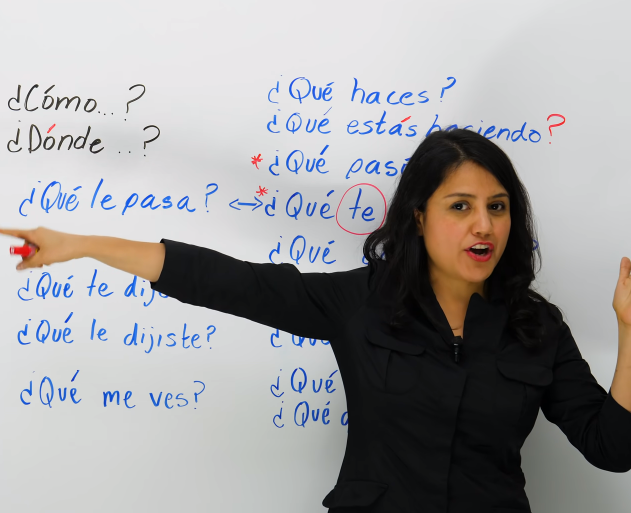
There is another way to ask, but it is less common. You can also ask ¿Qué haces?. This translates more directly to "What do you do?". However, it can be used to mean "What are you doing?" depending on the context.
haces is the present tense conjugation of hacer for the "you" (tú) form. While ¿Qué estás haciendo? implies you're asking about what someone is doing right now, ¿Qué haces? can also refer to what someone generally does.
For example, if you see someone working on a car, you'd likely ask ¿Qué estás haciendo?. But if you're asking about someone's job, you might ask ¿Qué haces?.

Step 4: Formal Form
If you are speaking to someone you should address formally (using usted instead of tú), you will need to change the verb conjugation. Use ¿Qué está haciendo? This is more respectful in certain situations.
Notice that está is the conjugation of estar for usted. This makes the question polite. Be mindful of when to use this form.
The formal form can be useful in cases. For example, speaking to elders or people with authority. It is generally better to err on the side of formality.

Step 5: Practice and Context
The best way to learn is through practice. Try using these phrases in different contexts. You could practice with a friend who speaks Spanish.
Pay attention to how native speakers use these phrases. This will give you a better understanding of their nuances. Observe how the situation dictates the choice of question.
Remember that language is dynamic and contextual. So, always be open to learning and adapting. Keep practicing and you'll master asking "What are you doing?" in Spanish in no time!